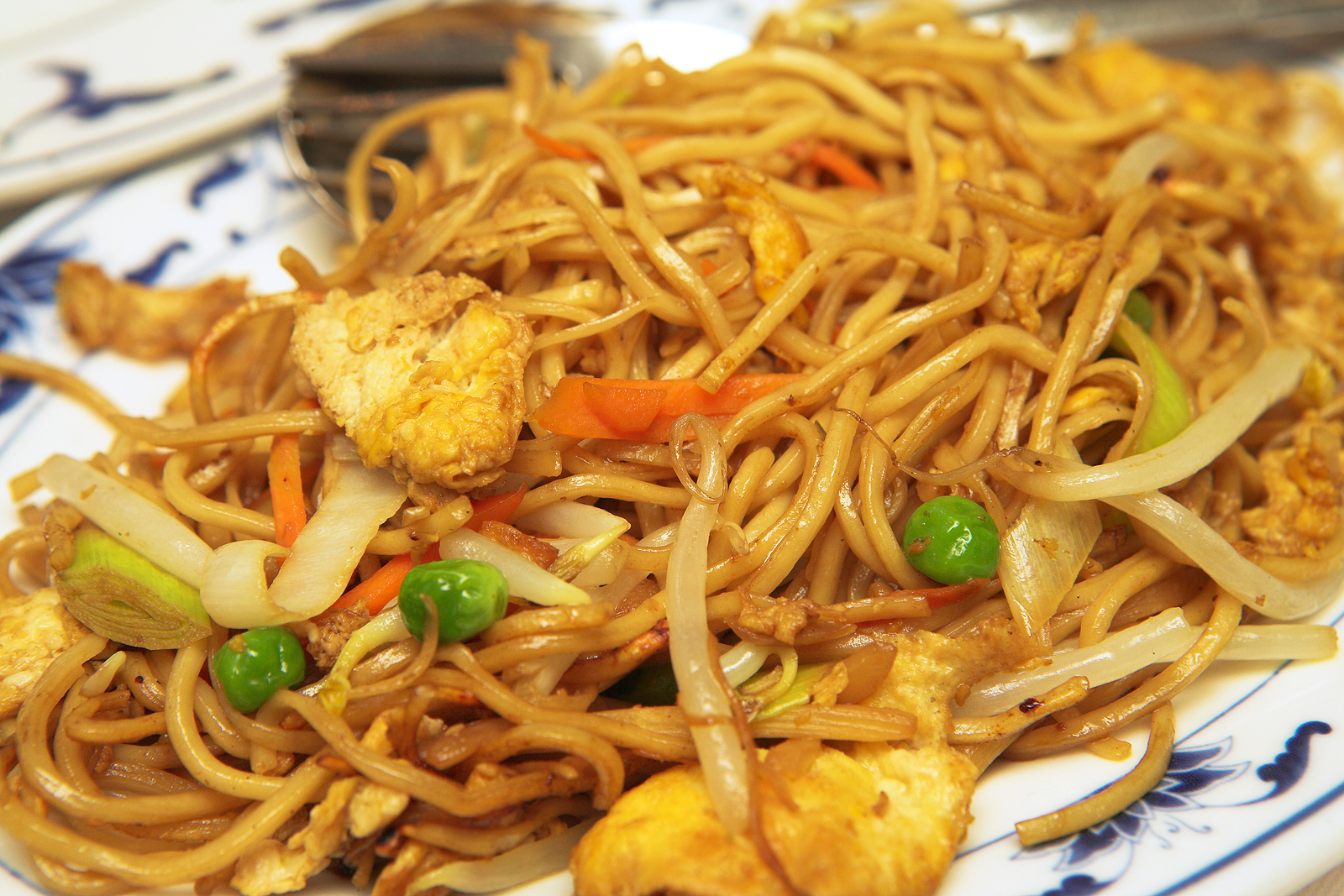
UNIVERSITY CITY, MO – August 19, 2026 (AsianFoodSTL) Wonton King has long been known as a Chinese restaurant, and Chinese cuisine remains central to its identity. But a closer look at the restaurant’s extensive menu also demonstrates something increasingly familiar to American diners: the culinary boundaries separating Chinese, Southeast Asian and other Asian cuisines are not always as rigid as restaurant categories might suggest.
Located at 8116 Olive Blvd. in University City, Wonton King is primarily a Cantonese and Hong Kong-style Chinese restaurant with decades of history. The restaurant serves traditional Chinese dishes, Chinese-American favorites, dim sum, noodles, seafood, roast meats, congee, rice dishes, and an extensive selection of chicken, beef, pork, and vegetable entrées.
At the same time, customers browsing the menu will find dishes and flavor combinations that reflect the broader culinary connections found throughout Asia.
That does not make Wonton King an Asian fusion restaurant, nor does it change its fundamental identity. It remains, first and foremost, a Chinese restaurant.
Instead, the broader menu offers an opportunity to understand how closely connected many Asian cuisines have become—both historically and through decades of restaurant culture in the United States.
Wonton King Remains Fundamentally Chinese
Wonton King’s menu is unmistakably Chinese at its foundation.
Cantonese and Hong Kong-style cooking have been particularly important to the restaurant’s identity. Dim sum is among its most recognizable specialties, while its regular menu spans a remarkably broad range of traditional, familiar dishes.
Customers can choose from wonton soup, hot-and-sour soup, egg drop soup, roast duck, honey barbecue pork, fried wontons, pot stickers, noodles, fried rice, seafood, beef, chicken, pork, tofu and vegetable dishes.
More traditional selections include seafood and fish maw soup, seafood and bean curd soup, salt-and-pepper preparations, Hong Kong-style noodles, congee, Chinese vegetables and numerous seafood specialties.
Then there are the Chinese-American standards familiar to generations of St. Louis diners: General Tso’s chicken, orange chicken, crispy sesame chicken, Mongolian beef, beef with broccoli, sweet-and-sour pork, lo mein and fried rice.
That mix of traditional regional Chinese cooking and Chinese-American restaurant favorites shows how cuisines evolve.
Chinese food served in the United States has never represented a single cooking tradition. China is geographically enormous, with significant differences among Cantonese, Sichuan, Hunan, Shanghai, Beijing and numerous other regional cuisines.
American Chinese restaurants added another layer, adapting ingredients, cooking techniques and recipes for local tastes while maintaining connections to their culinary origins.
Wonton King’s menu reflects that history.
Where Other Asian Influences Enter the Menu
One of the more obvious examples of Asian crossover at Wonton King is Singapore fried vermicelli.
The dish generally combines thin rice noodles with curry seasoning, vegetables and proteins. Despite the name, versions of Singapore noodles became strongly associated with Cantonese and Hong Kong restaurant cooking and subsequently became commonplace on Chinese restaurant menus internationally.
That makes the dish a useful illustration of why attaching a single nationality to every Asian menu item can become complicated.
A customer might see the word “Singapore” and understandably associate the dish exclusively with Singaporean cuisine. Yet Singapore-style noodles have a particularly strong history within Cantonese restaurant culture.
Curry provides another example.
Curry chicken, curry beef, and curry shrimp appear on Wonton King’s lunch menu. Curry immediately brings countries such as India and Thailand to mind for many American diners, but curry preparations are hardly exclusive to either country.
Curry flavors spread throughout Asia through centuries of trade, migration, and cultural exchange. Chinese communities developed their own curry preparations, particularly in southern China and Hong Kong.
A Chinese restaurant serving curry therefore is not necessarily departing from Chinese cooking.
It can be serving a Chinese interpretation of a flavor tradition shared across much of Asia.
Asian Cuisines Have Influenced One Another for Centuries
In the United States, there is a tendency to divide Asian restaurants into clearly defined categories: Chinese, Japanese, Thai, Vietnamese, Korean, Malaysian, Singaporean, and others.
Those descriptions are useful. They tell customers what kind of restaurant they are entering and provide important recognition to distinct culinary cultures.
But food does not always respect national borders as neatly as restaurant directories do.
China shares borders with numerous countries, and Chinese migration has had an enormous influence throughout Southeast Asia and beyond. Chinese communities have played significant roles in the food cultures of Singapore, Malaysia, Thailand, Vietnam, Indonesia and the Philippines.
Ingredients, noodles, dumplings, rice preparations, sauces and cooking methods have moved across the region for generations.
The wok is one obvious example.
Stir-frying is strongly associated with Chinese cooking, yet wok-based cooking appears throughout Southeast Asia.
Rice noodles offer another.
Rice noodles appear prominently in Chinese cooking, particularly southern Chinese cuisine, but they are equally important in Vietnamese, Thai and other Southeast Asian traditions.
Soy sauce, tofu, ginger, garlic, scallions, sesame oil, fermented ingredients and various chili preparations similarly appear across numerous Asian cuisines.
The finished dishes may differ, but the pantry can include many of the same building blocks.
Why Restaurant Menus Often Overlap
The crossover becomes even more visible in American restaurants.
A Chinese restaurant may serve a Southeast Asian-influenced noodle preparation. A Vietnamese restaurant might offer Chinese-influenced dishes. A Thai restaurant may offer Chinese-style fried rice or stir-fries. A broadly defined Asian restaurant might serve dishes associated with several countries.
There are historical reasons for this, but there are practical restaurant reasons as well.
Restaurants work with ingredients that can be used across multiple preparations. Rice, noodles, chicken, beef, pork, shrimp, tofu, vegetables, and sauces can form the foundation of dozens of dishes.
A kitchen equipped with powerful burners and woks can produce numerous stir-fried preparations without completely changing its operating system for every dish.
Customers also influence menus.
American diners have become accustomed to seeing certain foods across Asian restaurant categories. Spring rolls, dumplings, fried rice, noodle dishes and curry preparations can appear in multiple restaurant concepts even though the recipes and culinary origins may differ considerably.
That does not mean all Asian food is the same.
Far from it.
Differences in seasoning, technique, ingredients, balance, and presentation give each cuisine its own character. However, acknowledging those distinctions does not require pretending that the cuisines developed in isolation from one another.
They did not.
Cantonese Cooking Is Particularly International
Wonton King’s Cantonese and Hong Kong orientation makes the broader Asian connections particularly appropriate.
Hong Kong developed one of the world’s great restaurant cultures, shaped by Cantonese traditions while also absorbing outside influences.
Cantonese cooks became internationally influential as Chinese communities expanded across Southeast Asia, North America, Europe and elsewhere. As restaurants adapted to new countries, local ingredients and customer preferences entered their kitchens.
The result is a culinary tradition that can remain distinctly Cantonese while comfortably incorporating ideas from elsewhere.
That history helps explain why a restaurant such as Wonton King can serve unmistakably Chinese dishes alongside items carrying flavors or names associated with other parts of Asia without becoming something entirely different.
Its core remains Chinese.
Its menu reflects a culinary world where cultures have exchanged ideas for a long time.
Dim Sum Keeps Tradition at the Center
If one part of Wonton King’s operation clearly anchors the restaurant to its Cantonese heritage, it is dim sum.
Dim sum developed within southern Chinese and Cantonese food culture and became closely associated with tea houses and communal dining.
Rather than ordering one large entrée per person, diners traditionally share multiple small dishes. Dumplings, steamed buns, rolls, and other small plates arrive at the table, encouraging the entire group to sample different flavors and textures.
Wonton King has become particularly associated locally with the dim sum experience. The restaurant promotes dim sum as a major offering, complementing its extensive regular lunch and dinner menu.
That communal approach also helps explain the enormous variety found in traditional Chinese restaurants.
Chinese dining frequently revolves around sharing.
One table might order seafood, vegetables, noodles, pork, chicken, soup, and rice at the same time. The purpose is not necessarily for one diner to consume one plate but for everyone to experience several dishes.
For customers unfamiliar with traditional Chinese dining, ordering several selections and sharing them can provide a much broader introduction to the menu.
From Traditional Chinese to Familiar American Favorites
Another important distinction is the difference between dishes that originated in China and those developed or substantially adapted in the United States.
Wonton King serves both.
A diner looking for recognizable Chinese-American comfort food can order dishes such as General Tso’s chicken, sesame chicken, orange chicken, crab rangoon or familiar fried-rice combinations.
Another customer can move toward Cantonese roast meats, seafood, congee, Chinese vegetables, noodle soups and dim sum.
Neither customer is wrong about what constitutes “Chinese food.”
They are simply experiencing different branches of a cuisine that has evolved across countries and generations.
Chinese-American food has its own history, particularly in cities such as St. Louis, where Chinese restaurants have been neighborhood institutions for generations.
The ability to satisfy diners looking for familiar American favorites while still preparing more traditional dishes is one reason expansive Chinese restaurant menus have endured.
Olive Boulevard Provides the Right Setting
Wonton King’s location also matters.
Olive Boulevard, through University City and the surrounding area, has become one of the St. Louis region’s most recognizable destinations for Asian dining.
Chinese restaurants representing different regional traditions line the corridor, alongside restaurants serving food from other Asian countries.
For diners, that concentration offers a chance to discover how diverse the term “Chinese food” really is.
One restaurant may emphasize Cantonese cooking. Another may concentrate on Sichuan flavors. Others may focus on noodles, dumplings, hot pot or regional specialties.
Wonton King occupies its own place within that landscape.
Its identity centers on Cantonese and Hong Kong-style Chinese cooking, but its large menu gives customers plenty of room to explore.
A Chinese Restaurant With a Menu That Travels
The simplest description of Wonton King is still the most accurate: it is a Chinese restaurant.
Calling it a generic “Asian restaurant” would understate the Cantonese and Hong Kong traditions at the heart of its menu.
But describing it as Chinese does not mean every dish must fit inside an artificially narrow definition of Chinese cuisine.
Asian culinary traditions have crossed borders for centuries. Chinese cooking influenced neighboring countries, neighboring cuisines influenced Chinese communities, and migration carried all of those traditions around the world.
You can see that history on restaurant menus today.
At Wonton King, customers can sit down for dim sum, order Cantonese and Hong Kong specialties, choose traditional seafood and noodle preparations, enjoy familiar Chinese-American favorites, or try dishes that reflect flavors and influences shared with other Asian cuisines.
The result is not a departure from the restaurant’s Chinese identity.
It shows how broad Chinese food — and Asian food more generally — really is.
For diners exploring University City’s Olive Boulevard restaurant corridor, Wonton King offers a chance to experience that diversity at a single table: a dedicated Chinese restaurant firmly rooted in its own traditions, but with a menu that shows how interconnected Asian cuisines have always been.
